
3-AXIS ACCELEROMETER
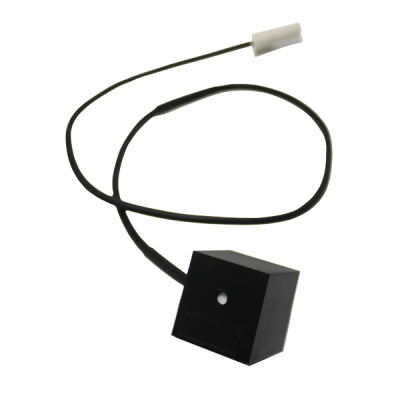
This sensor is designed to measure the 3 separate (orthogonal) components of the acceleration of a motion.
Specifications
| Single Range | -58.8 m/s² to 58.8 m/s² (or -6g to 6g) |
| Accuracy | ±10% of operating range |
ACCELEROMETER
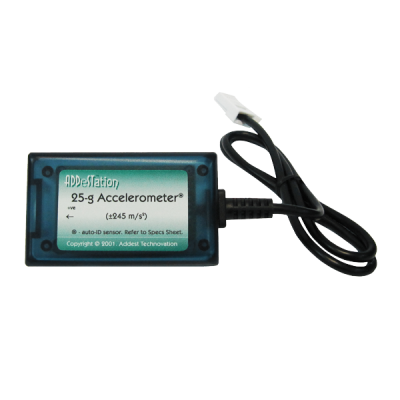
This sensor is designed to measure 1-dimensional acceleration.
Specifications
| Single Range | -245 m/s² to 245 m/s² (or -25g to 25g) |
| Accuracy | ±1% of operating range |
Illustrative Experiments
The Accelerometer was used to monitor the acceleration when a lift moved. The graph shows the change in acceleration for the lift to start moving from the ground floor and stop at the ninth floor.

BAROMETER
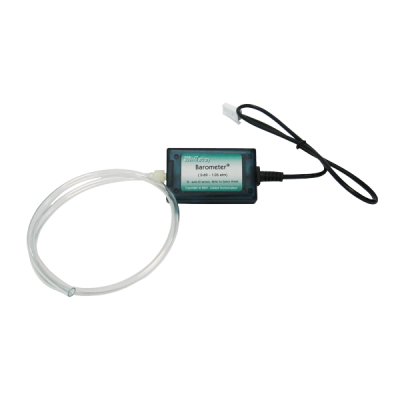
The sensor is designed for weather studies. It can be used as an altimeter. It can also be used for experiments involving pressures close to normal atmospheric pressure.
Specifications
| Single Range | -400 - 3000 m or |
| 0.69 – 1.05 atm or | |
| 20.6 – 31.5 in Hg or | |
| 524 – 798 mmHg | |
| Accuracy | ± 2% of full scale reading |
CARBON DIOXIDE SENSOR
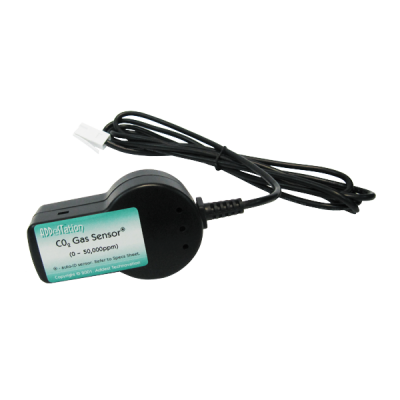
This sensor is designed to measure gaseous carbon dioxide level.
Specifications
| Single Range | 0 to 50,000 ppm |
| Accuracy | ± ( 70 ppm +5% of reading ) |
| Response Time | 90% of full-scale reading in 120 seconds |
Illustrative Experiments
The CO2 Gas Sensor was used to monitor the amount of CO2 in a bottle containing several tens of small beetles. The graph shows that the amount of CO2 increased gradually over time, demonstrating that the beetles did produce CO2.

CHARGE SENSOR
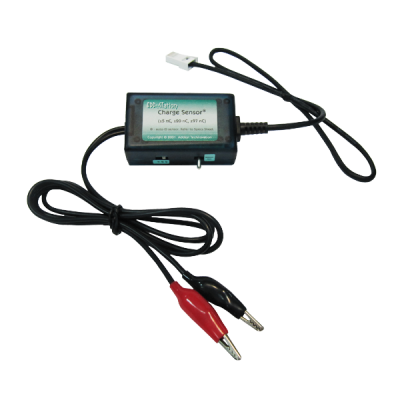
This sensor is designed to provide quantitative measurements of charge.
Specifications
| Triple Range | Low Range: -5 nC to 5 nC |
| Mid Range: -20 nC to 20 nC | |
| High Range: -97 nC to 97 nC | |
| Accuracy | ±5% of Operating Range |
COLORIMETER
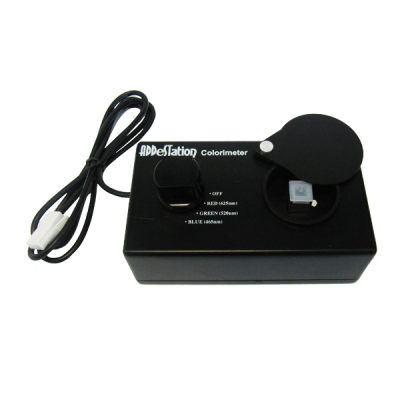
This sensor is designed to determine the concentration of solution by analyzing its color intensity.
Specifications
| Single Range | 0 % to 100 % Transmittance or |
| 0 to 3 Absorbance | |
| Wavelength | 625 nm (red), 520 nm (green), 465 nm (blue) |
Illustrative Experiments
The Colorimeter was used to measure the amount of light transmitted through a series of calibrated solutions. A calibration curve can thereby be obtained to determine the concentration of an unknown solution.

CONDUCTIVITY SENSOR
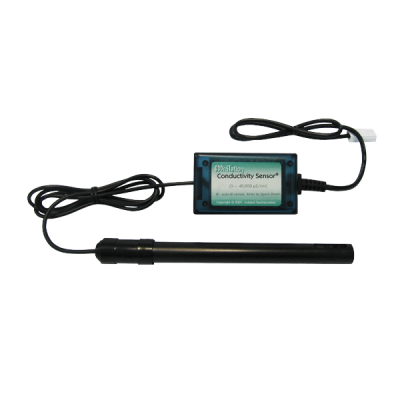
The sensor is designed to measure either solution conductivity or total ion concentration of aqueous samples.
Specifications
| Triple Range | Low Range: 0 to 400 μS/cm |
| Mid Range: 0 to 4,000 μS/cm | |
| High Range: 0 to 40,000 μS/cm | |
| Accuracy | ±1 % of operating range |
| Operating Temperature | 0 to 80 °C |
Illustrative Experiments
The Conductivity Sensor was used to measure the concentration of ions in the water surrounding a piece of salt-infused agar cube. The concentration of ions in water increased gradually due to diffusion. The rate of diffusion depends on the surface area to volume ratio of the agar cube.

CURRENT SENSOR (±2.5A)
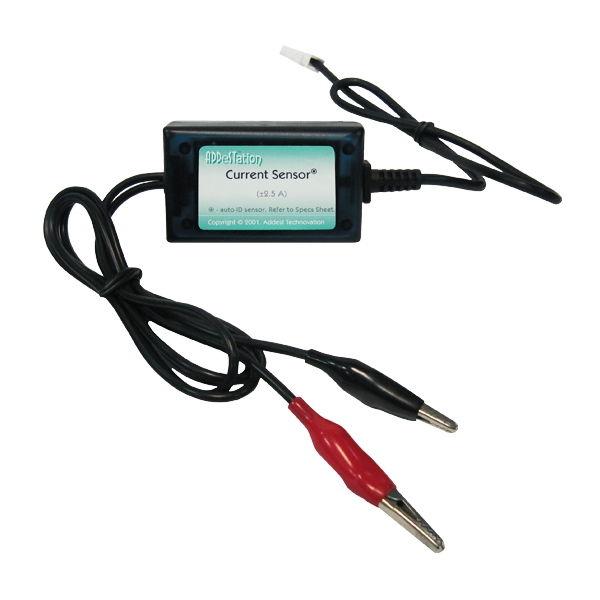
This sensor is designed to measure current, but cater to wider range measurements.
Specifications
| Single Range | -2.5 A to 2.5 A |
| Accuracy | ±2 % of operating range (after proper zeroing) |
| Input Type | DC or AC |
| Input Design | Differential |
| Max. Over-Current | 3.0 A (note: prolonged over-current will damage sensor) |
CURRENT SENSOR (±0.3A, ±1A)
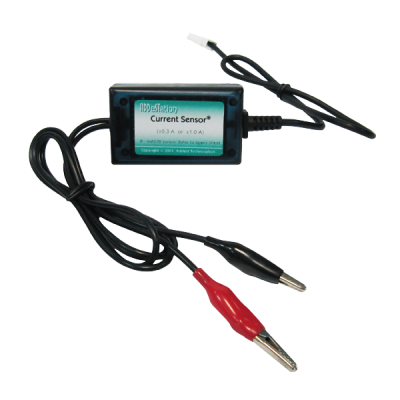
This sensor is designed to measure the amount of current, and can be used for both direct-current (DC) and alternating-current (AC).
Specifications
| Dual Range | Low Range: -0.3 A to 0.3 A |
| High Range: -1 A to 1 A | |
| Accuracy | Accuracy: ±2 % of operating range (after proper zeroing) |
| Input Type | DC or AC |
| Input Design | Floating and differential |
| Max. Over-Current | 1.5 A (prolonged over-current will damage sensor) |
Illustrative Experiments
The Current Sensor was used to measure the induced current generated when a magnet fell through a coil. The graph shows the change in induced current with time.

CURRENT SENSOR (±20mA, ±200mA)
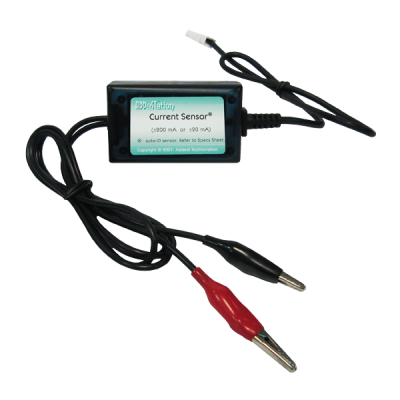
This sensor is designed to measure very low electrical current and can be used for both direct-current (DC) and alternating-current (AC).
Specifications
| Dual Range | Low Range: -20 mA to 20 mA |
| High Range: -200 mA to 200 mA | |
| Accuracy | ±2% of Operating Range (after proper zeroing) |
| Input Type | DC or AC |
| Input Design | Floating and differential |
CURRENT SENSOR (±1uA)
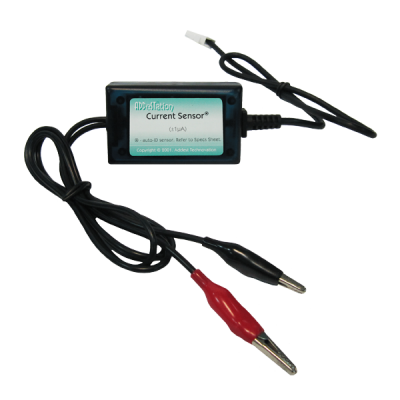
This sensor is designed to measure very low current (of the order of μA) .
Specifications
| Single Range | -1 μA to 1 μA |
| Accuracy | ±5 % of operating range |
DIGITAL BALANCE
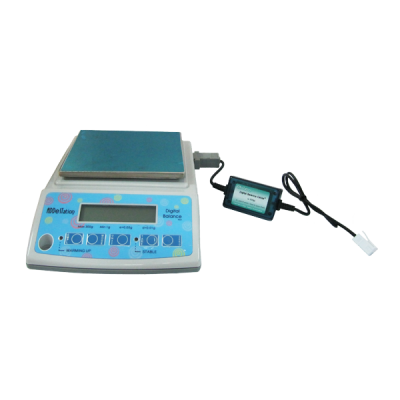
This sensor is designed to measure the mass of an object.
Specifications
| Range | 0 to 300 g |
| Accuracy | 0.01 g |
DISSOLVED OXYGEN SENSOR
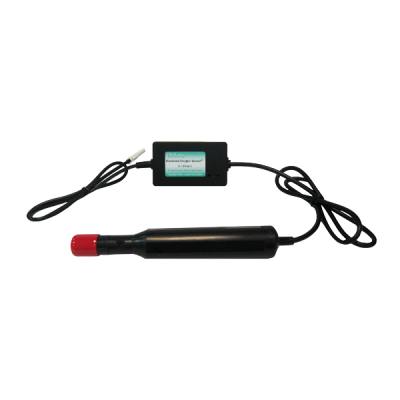
This sensor is designed to measure the amount of oxygen dissolved in liquid.
Specifications
| Single Range | 0 to 20 mg/L |
| Accuracy | ±2 % of full scale |
| Temperature Range | 1 to 45 °C |
| Temperature Compensation | Automatic from 1°C to 40°C |
Illustrative Experiments
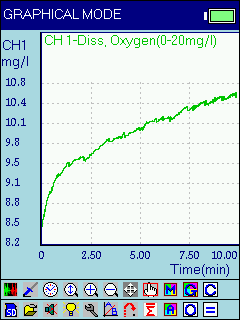
The Dissolved Oxygen Sensor was used to study photosynthesis carried out by water plants. The graph shows that the amount of dissolved oxygen increases over time, thereby demonstrating that the water plants had carried out photosynthesis.
DROP COUNTER PLATFORM
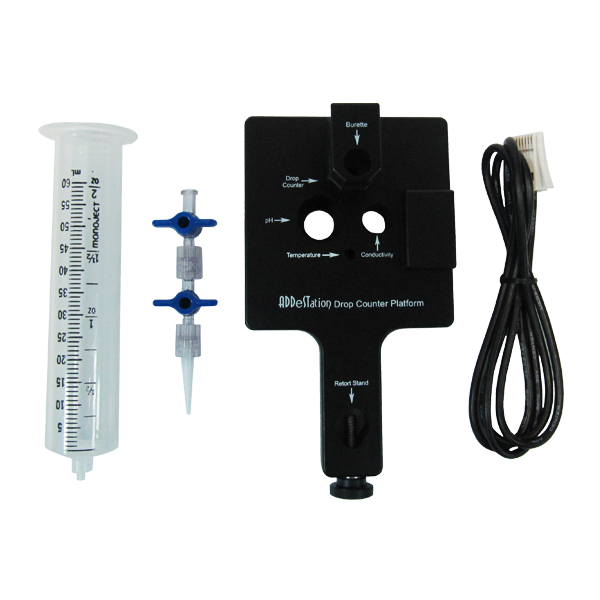
This Drop Counter Platform is able to count the number of drops of liquid falling from a burette. It is specially designed to house neatly several sensors such as pH Sensor, Temperature Sensor and Conductivity Sensor as well as a burette to facilitate titration experimentations.
Specifications
| Input Voltage | 5 VDC ± 0.25 V |
| Light Source | 875 nm infrared |
Illustrative Experiments
The Drop Counter Platform was used to monitor the volume of titrant added to the analyte during titration. The red graph on the left shows the change in volume when a known concentration of acid is gradually dripped into an unknown concentration of alkaline. The graph on the right shows the graph of pH versus volume.

ECG SENSOR
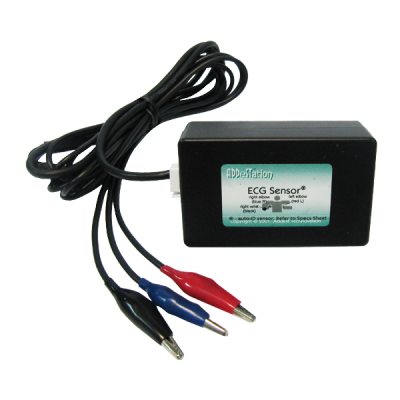
This sensor is designed to measure the subtle electrical signals produced when the heart pumps.
Specifications
| Range | 0 to 5 V |
| ECG Sensor Gain | 0.5 V/mV |
Illustrative Experiments
The graph shows the ECG signals of a healthy person at rest which were obtained with the ECG Sensor.

ETHANOL SENSOR
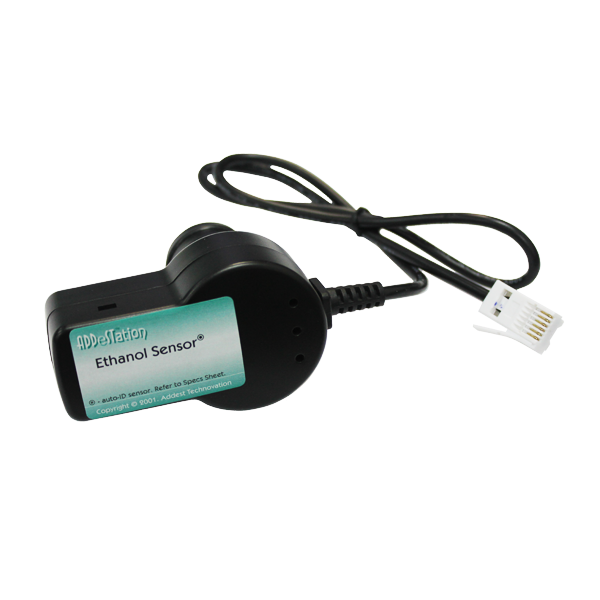
No description available.
FLOW RATE SENSOR
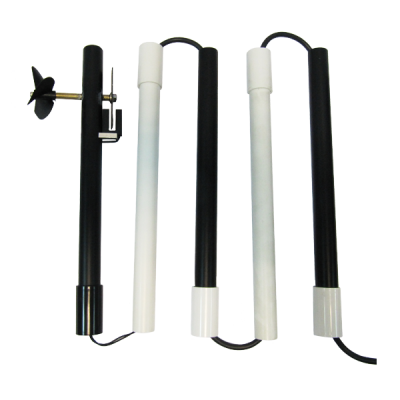
This sensor is designed to measure the flow rate of liquids.
Specifications
| Range | 100 to 1000 mL/min |
| Accuracy | ±5% |
Illustrative Experiments
The Flow Rate Sensor was used to measure the flow rate of water.
FORCE SENSOR
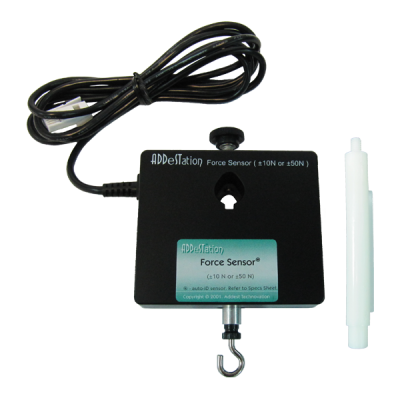
This sensor is designed to measure force and is able to indicate whether the force is a push or pull.
Specifications
| Dual Range | Low Range: -10 N to 10 N |
| High Range: -50 to 50 N | |
| Resolution | 0.01 N for low range & 0.05 N for high range |
Illustrative Experiments
The Force Sensor was used to measure the tension of a spring attached to a ball oscillating vertically. The graph on the left shows the variation in tension over a sufficiently long period demonstrating a decrease in the amplitude of oscillation over time. The graph on the right shows the details demonstrating force’s variation with time in a sinusoidal fashion.

GAS PRESSURE SENSOR (0-700kPa)
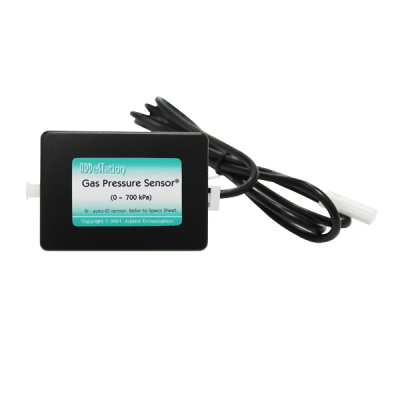
This sensor is designed to measure gas pressure.
Specifications
| Range | 15 to 700 kPa |
| Resolution | ±2 % of operating range |
GAS PRESSURE SENSOR (0-250kPa)
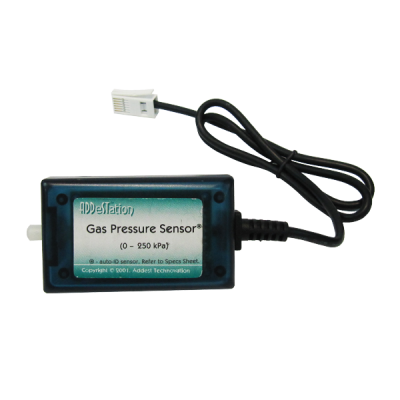
This sensor is designed to measure gas pressure.
Specifications
| Range | 0 to 250 kPa |
| Accuracy | ±2 % of operating range |
Illustrative Experiments
The Gas Pressure Sensor was used to measure the change in gas pressure when potato's enzyme catalysed the breakdown of hydrogen peroxide to water and oxygen. The graphs show the rates of change in gas pressure with substrates of different enzyme concentrations.

HEART RATE SENSOR
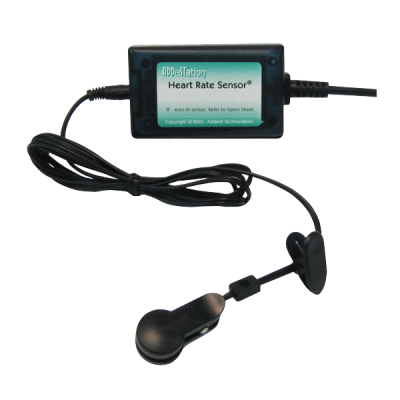
This sensor is designed to compute your heart rate per minute automatically.
Specifications
| Range | 40 to 200 BPM |
| Accuracy | ±5 % of reading |
ION SELECTIVE SENSOR (AMMONIUM)
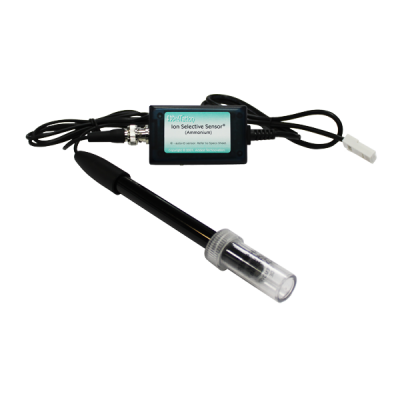
This sensor is designed to measure the concentration of ammonium ions (NH4+) in aqueous samples.
Specifications
| Range | 0.1 to 18,000 mg/L or ppm |
| Accuracy | 30% of the measured value (after calibration) |
ION SELECTIVE SENSOR (CALCIUM)
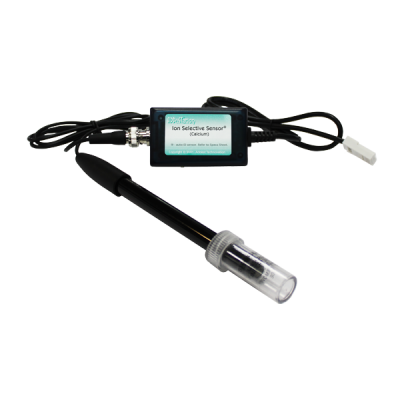
This sensor is designed to measure the concentration of calcium (Ca2+) in aqueous samples.
Specifications
| Range | 0.2 to 40000 mg/L or ppm |
| Accuracy | 30% of the measured value (after calibration) |
Illustrative Experiments
The Calcium Ion Selective Sensor was used to measure the concentration of calcium ions in different milk products.
ION SELECTIVE SENSOR (CHLORIDE)
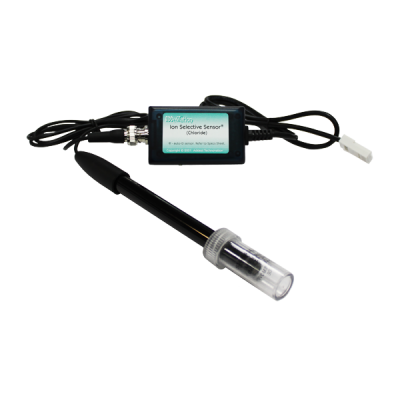
This sensor is designed to measure the concentration of chloride ion in water.
Specifications
| Range | 1.8 – 35,500 mg/L or ppm |
| Accuracy | ±2% for every degree difference |
ION SELECTIVE SENSOR (NITRATE)
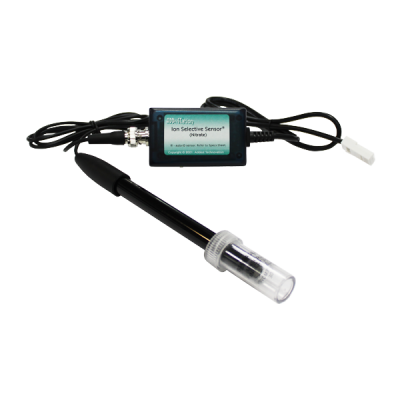
This sensor is designed to measure the concentration of nitrate ions (NO3-) in aqueous samples.
Specifications
| Range | 0.1 to 14,000 mg/L or ppm |
| Accuracy | 30% of the measured value (after calibration) |
IR THERMOMETER
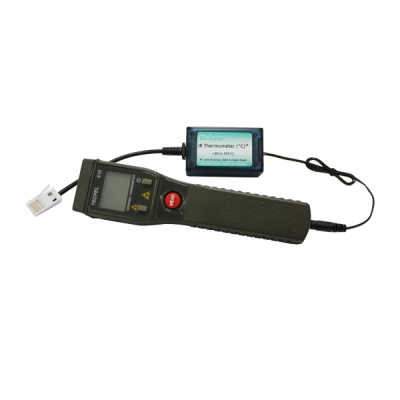
This sensor is designed to measure the temperature of an object by measuring its infrared radiation emission. It is a non-contact, fast-responding temperature measuring device. It is useful when one needs to measure the surface temperature of an object. It can be used with or without a datalogger.
Specifications
| Range | -20°C to 550°C |
| Accuracy | 2% at room temperature |
| Resolution | 1°C |
| Emissivity | 0.95 preset |
LIGHT SENSOR
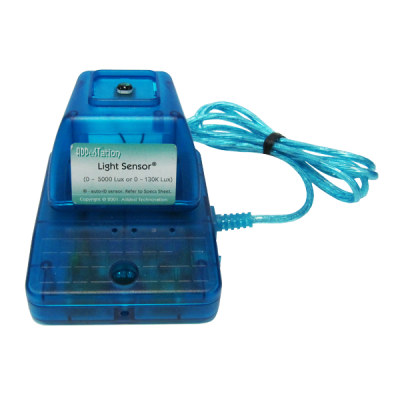
This sensor is designed to measure the intensity of light.
Specifications
| Dual Range | Low Range: 0 to 5,000 Lux |
| High Range: 0 to 130,000 Lux | |
| Accuracy | ±4 % of the reading obtained |
Illustrative Experiments
The Light Sensor was used to measure the light intensity in a room after a fluorescent lamp had been switched on. The graph shows that the intensity of fluorescent light was not stationary but rose and fell in a periodic manner.

ULTRA VIOLET (A) SENSOR
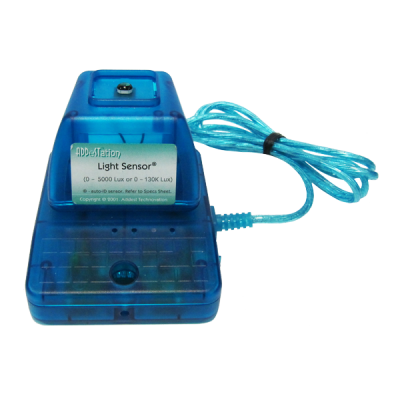
This sensor is used for studying ultraviolet-related experiments for ultraviolet radiation of range 320nm to 390 nm.
Specifications
| Range | 0 to 18000 μ W/cm2 |
| Wavelength | 320nm to 390nm |
| Accuracy | 5% |
MAGNETIC FIELD SENSOR
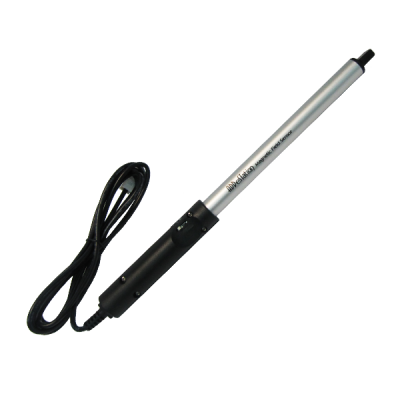
This sensor is designed to measure magnetic field strength.
Specifications
| Triple Range | Low Range: -4.2 to 4.2 Gauss |
| Medium Range: -84 to 84 Gauss | |
| High Range: -630 to 630 Gauss | |
| Resolution | 0.01 Gauss for low range, 0.21 Gauss for medium range & 2.1 Gauss for high range |
MOTION SENSOR
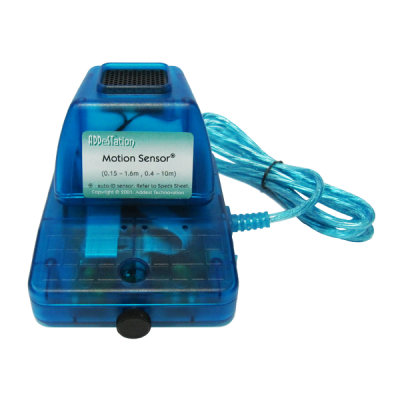
This sensor is designed to measure and track the distance of a moving object, thereby facilitating computation of velocity and acceleration.
Specifications
| Dual Range | Low Range: 0.15 to 1.6 m |
| High Range: 0.4 to 10 m | |
| Accuracy | ±0.5 mm for low range and ±2.5 mm for high range |
Illustrative Experiments
The Motion Sensor was used to monitor the motion of a bouncing ball. The graph on the left shows the distance of the ball versus time, , the middle graph shows velocity versus time and the graph on the right shows acceleration versus time.

OXYGEN SENSOR
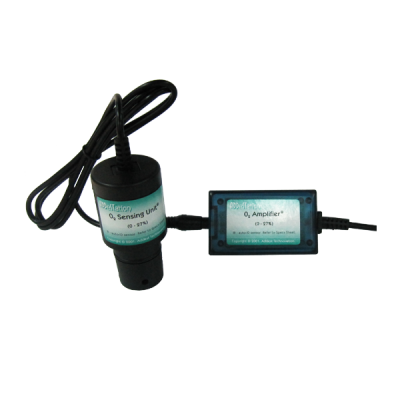
This sensor is designed to measure gaseous oxygen level.
Specifications
| Single Range | 0% to 27% |
| Accuracy | ±1% volume O₂ (at standard Pressure 760 mmHg) |
| Operating Temperature Range | -20 to 50°C |
| Operating Humidity Range | 0 to 99% RH |
| Gas sample method | Diffusion |
| Response Time | <15 seconds to 95% of final value |
Illustrative Experiments
The Oxygen Gas Sensor was used to monitor oxygen’s level in a bottle containing several tens of small beetles. The graph shows that oxygen’s level gradually reduced over time, demonstrating that the beetles did consume oxygen.

pH SENSOR
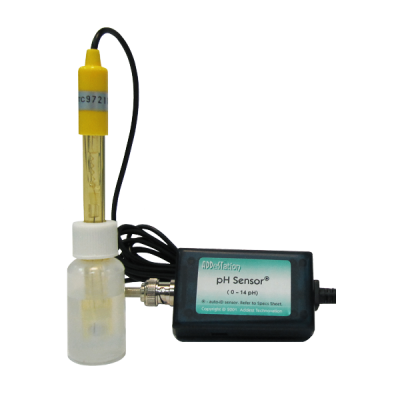
This sensor is designed to determine quantitatively the acidity/alkalinity of a solution in terms of the pH value.
Specifications
| Range | 0 to 14 pH |
| Accuracy | pH ±0.1 (after calibration) |
| Temperature Range | 5 to 60°C |
Illustrative Experiments
The pH Sensor was used to monitor the change in pH during titration. The green graph on the left showed the change in pH when a known concentration of acid is gradually dripped into an unknown concentration of alkaline. The graph on the right showed the graph of pH versus volume.

PHOTOGATE
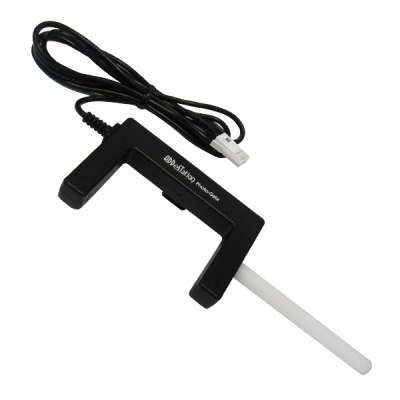
This sensor is designed to detect whether there is something in between the two ends of it.
Specifications
| Output | >4.0V (Blocked), <1.0V (Unblocked) |
| Light Source | Infra-Red with peak wavelength at 875 nm |
Illustrative Experiments
The graph shows the output of the Photogate versus time when a pendulum was made to swing between it. The period of the pendulum can be readily determined by the time difference between 2 consecutive falling edges.

RADIATION SENSOR
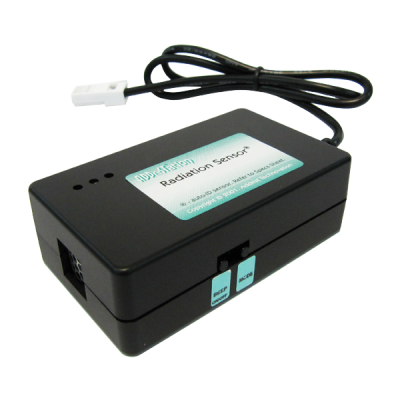
This sensor is designed to measure total alpha, beta, and gamma radiation.
Specifications
| Range | mR/hr: 0.001 to 60 or |
| Count Per Minute (CPM): 0 to 65535 Count or | |
| Count Per Second (CPS): 0 to 3500 Count or | |
| Total Count: 0 to 65535 Count | |
| Resolution | 0.001 (mR/Hr), 1 (CPM), 1 (Total), 1 (CPS) |
RADIO WAVE SENSOR
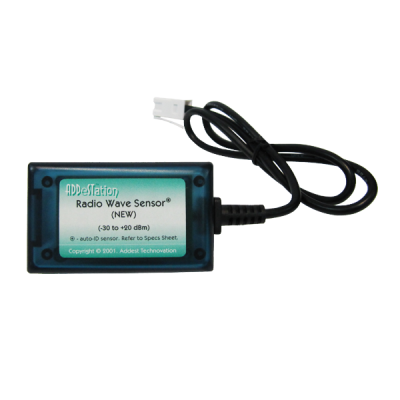
This sensor is designed to measure the power density of radiation emitted by mobile phones.
Specifications
| Range | -30 to 20 dBm |
| Frequency Range | 50 MHz to 2 GHz |
Illustrative Experiments
The Radio Wave Sensor was placed near a mobile phone to monitor the radiation that it emitted. The phone was switched on but stayed idle initially. Then someone called and the phone rang for a while before the owner answered. After a short conversation, the owner hung up the phone letting it stay idle again. The graph above shows the change in radiation versus time.

RELATIVE HUMIDITY SENSOR
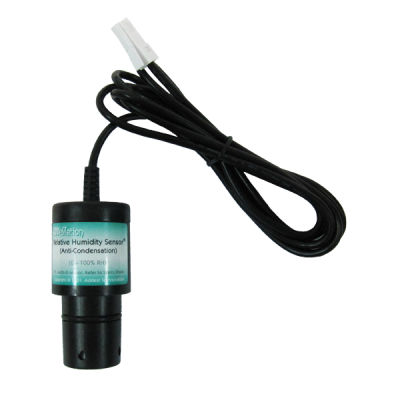
This sensor is designed to measure relative humidity in air.
Specifications
| Range | 0 to 100% |
| Accuracy | 5% |
| Temperature Range | -20°C to 60°C |
Illustrative Experiments
The Relative Humidity Sensor was used to measure the transpiration rate of a twig of leaves sealed into a plastic bag. The graph shows the change in relative humidity with time.

ROTARY MOTION SENSOR
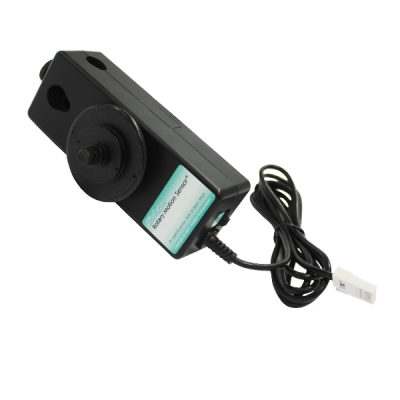
This sensor is designed to measure linear/angular displacement, which facilitates computations of linear/angular velocity and acceleration. It can be used for a great variety of experimentations including those with regard to linear/angular momentum, rotational inertia, linear/angular kinematics, torque, simple harmonic motion and damped oscillation.
Specifications
| Angular Range | -360° to 360° |
| Resolution | 0.125° (high resolution), 2° (low resolution) |
| Linear Range | -1000 mm to 1000 mm |
| Resolution | 0.1 mm (high resolution) or 1.6 mm (low resolution) |
| Maximum Speed | 1 rev/s (high resolution) or 16 rev/s (low resolution) |
Illustrative Experiments
The green graph shows the angular displacement of a rotating disc mounted on the rotary sensor. The red graph shows its angular velocity obtained through a differentiation of the graph of angular displacement.

SALINITY SENSOR
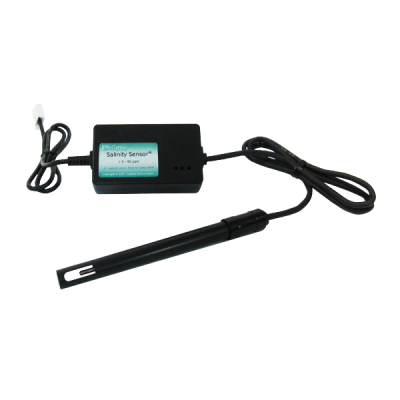
This sensor is designed to measure the total-dissolved salt content in water.
Specifications
| Range | 0 to 50 ppt |
| Accuracy | 1% |
Illustrative Experiments
The Salinity Sensor can be used to measure the dissolved salt content in different water bodies such as the ecopond, reservoir and sea.
SOUND LEVEL SENSOR
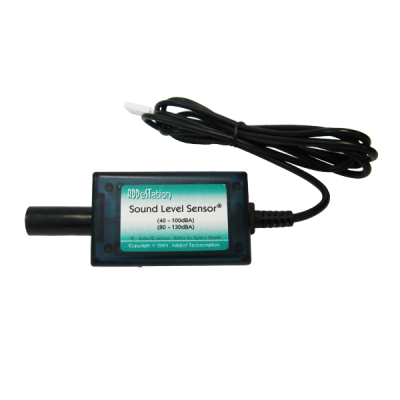
This sensor is designed to measure the loudness of sound. It employs minimal analogue components and relies on digital signal processing (DSP) techniques to achieve very high signal to noise ratio.
Specifications
| Dual Range | Low Range: 40 to 100 dB |
| High Range: 80 to 130 dB |
Illustrative Experiments
The Sound Level Sensor was used to monitor the sound level in a school’s canteen. The graph shows the sound level over a period before, during and after recess.
SOUND SENSOR WITH POWER AMPLIFIER
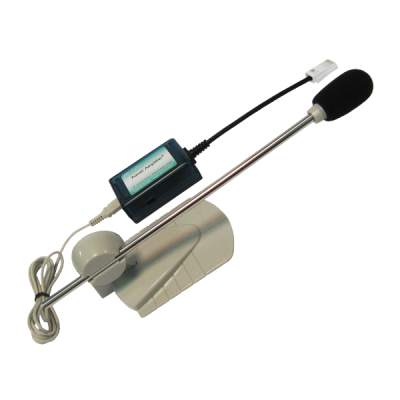
This sensor is designed to measure the amplitude of sound wave impinging on it. Unlike those commonly available plastic microphones that can be easily twisted, its stainless steel body is solid and rugged.
Specifications
| Range | 20 to 20,000 Hz |
| Sensitivity | -58 dB ± 3 dB |
Illustrative Experiments
The Sound Sensor was used to measure “Ah” sounds produced by a person. The graph shows the variation of sound’s amplitude over time.

STETHOSCOPE WITH POWER AMPLIFIER
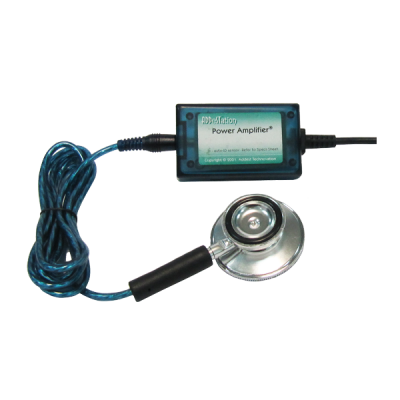
This sensor is designed to capture the sound signals generated by our heart.
Specifications
| Range | 30 to 16,000 Hz |
| Sensitivity | -42 dB ± 3 dB |
| Diaphragm's Diameter | 4.7 cm |
Illustrative Experiments
The graph shows the heart sound signals of a person captured using the stethoscope.

SURFACE TEMPERATURE SENSOR
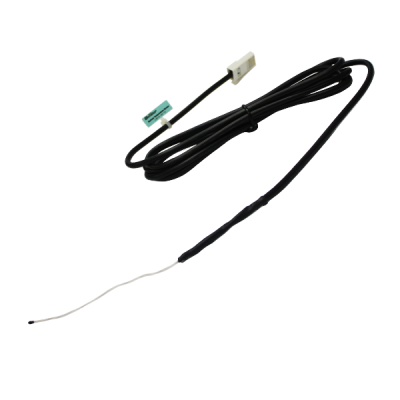
The Surface Temperature Sensor is designed for use in situations in which low thermal mass or flexibility is required, or for measuring the surface temperature of an object, such as skin temperature measurement. The sensor has an exposed thermistor, and this results in an extremely rapid response time.
Specifications
| Range | -40 to 125°C |
| Accuracy | ±0.5°C |
| Response time | 5 seconds |
TEMPERATURE SENSOR
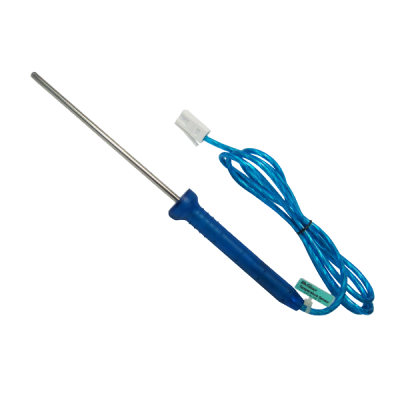
This sensor is designed to measure temperature. Its stainless steel’s body can withstand corrosiveness that chemicals may introduce.
Specifications
| Range | -20 to 120°C |
| Accuracy | ±1°C |
| Sensor Type | NTC Thermistor |
| Sensor Body | Stainless Steel (SS316) |
| Body Length | 118 mm ± 2 mm |
| Body Diameter | 4 mm |
Illustrative Experiments
The Temperature Sensor was used to obtain the cooling curves of hot water. The graph in red corresponds to one obtained with hot water in a bare cup while that in green obtained with a cup wrapped with cloth.

METAL-TIP TEMPERATURE SENSOR
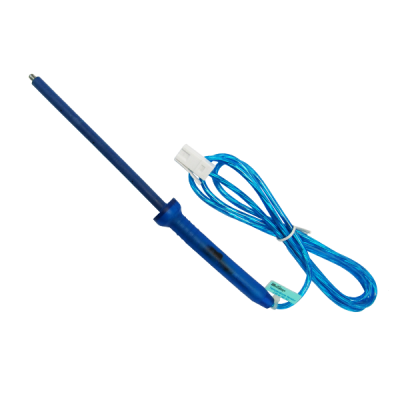
This sensor is designed to measure the temperature of a small region, and this helps to determine the freezing point of water and melting point of ice. Only a small portion of the sensor body is made of stainless steel.
Specifications
| Range | -20 to 120 °C |
| Accuracy | ±1 °C |
THERMOCOUPLE
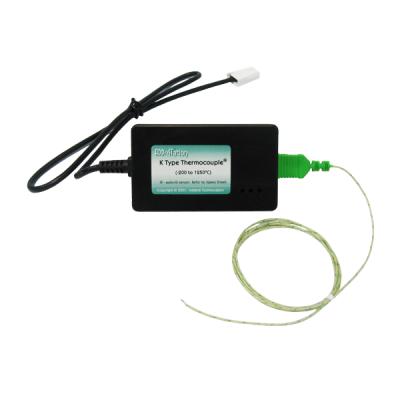
This sensor is designed to measure temperature in the range of -200°C to 1200°C. It uses type-K thermocouple wire.
Specifications
| Single Range | -200°C to 1,250°C |
| Accuracy | ±3°C |
TURBIDITY SENSOR
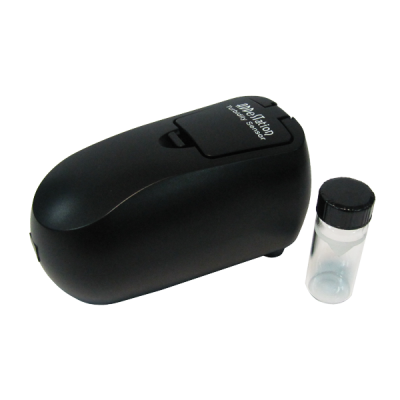
This sensor is designed to measure suspended particles in water, and this provides a measure of the clarity of water.
Specifications
| Range | 0 NTU to 200 NTU |
| Accuracy | ±2% |
Illustrative Experiments
The Turbidity Sensor can be used to study the turbidity of water samples from different natural environments.
VOLTAGE SENSOR (±25V)
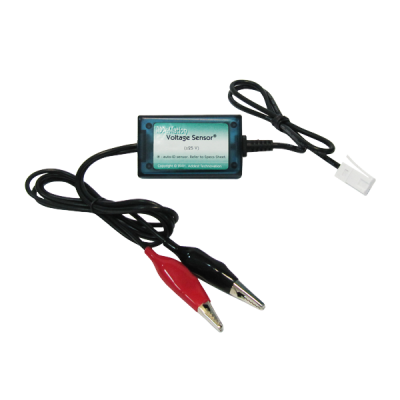
This sensor is designed to measure electrical voltage, but cater to wider range measurements.
Specifications
| Range | -25 V to 25 V |
| Accuracy | ±1% of operating range (after zeroing) |
| Input Type | DC or AC |
| Input Design | Differential |
| Input Impedance | 255 kΩ |
| Input Protection | At least ±50 V |
VOLTAGE SENSOR (±1, ±6V)
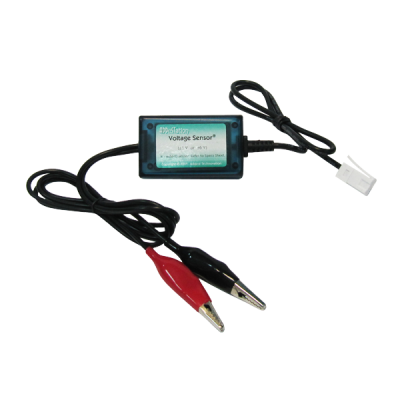
This sensor is designed to measure electrical voltage and can be used for both direct-current (DC) and alternating-current (AC).
Specifications
| Dual Range | High Range: -6 V to 6 V |
| Low Range: -1 V to 1 V | |
| Accuracy | ±1% of operating range (after zeroing) |
| Input Type | DC or AC |
| Input Design | floating and differential |
| Input Impedance | 670 kΩ |
| Input Protection | at least ±75 V |
Illustrative Experiments
The Voltage Sensor was used to study the characteristics of capacitor’s charging and discharging. The graph shows the charging and discharging curves obtained.

VOLTAGE SENSOR (±20mV, ±200mV)
This sensor is designed to measure very low electrical voltage and can be used for both direct-current (DC) and alternating-current (AC).
Specifications
| Dual Range | Low Range: -20 mV to 20 mV |
| High Range: -200 mV to 200 mV | |
| Accuracy | ±1% of operating range (after zeroing) |
| Input Type | DC or AC |
| Input Design | floating and differential |
WIND SPEED SENSOR
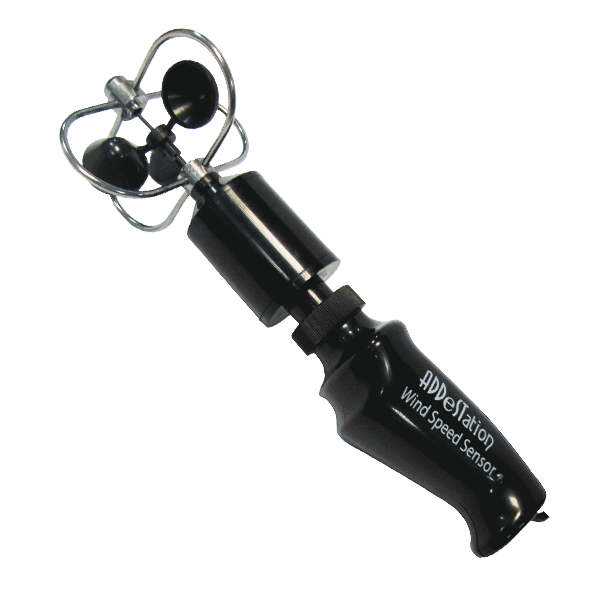
This sensor is designed to measure the wind speed.
Specifications
| Single Range | 0 m/s to 10 m/s |
| Accuracy | ±3% of reading |
| Resolution | 0.01 m/s |
Illustrative Experiments
The Windspeed Sensor can be used to measure the strength of the wind in various locations.